
Whoa!
It fits in a wallet like a driver’s license. And yet it behaves like serious hardware security for everyday use. Initially I thought smart-card wallets were gimmicks, but after testing them for months across phones and desktop apps I changed my mind. On one hand they simplify key management by eliminating typed seeds and paper backups, though on the other hand they force new mental models for recovery that many users find unfamiliar at first.
Seriously?
My instinct said they’d be clunky to use and awkward with phones. But the NFC flow is surprisingly smooth on iOS and Android. Actually, wait—let me rephrase that: the best implementations feel as seamless as tapping a transit card, while still keeping private keys inside a secure element that never exposes them to your phone’s operating system. That separation reduces a big category of threats: malware on a mobile device can intercept signed transactions only if the device gives up signing authority, which it shouldn’t with a properly engineered card.
Hmm…
Here’s what really bugs me about many wallet solutions today. They too often trade off security for convenience in subtle and risky ways. For most people the scary part isn’t a hack of a big exchange; it’s losing access because they misplaced a seed phrase, or storing a typed backup insecurely on cloud services where phishers and leaked databases find them. So the appeal of a smart-card that can act as a single, tamper-resistant root of trust—one you tap to sign, and that internally stores the private key—is obvious and compelling, even if it’s a little different from the mnemonic-centric workflows many veterans are used to.
Wow!
Usability matters more than security folks admit; it’s very very important to adoption. People won’t adopt security tools they find fiddly or time-consuming. So solutions that hide complexity behind a predictable mobile app interface, while giving the hardware card the heavy lifting for cryptographic operations, tend to win in the real world because they match human behavior better than textbook recommendations alone do. On the flip side that creates a centralization risk: the mobile app becomes a UX gatekeeper and, depending on design, could introduce metadata leaks or encourage risky backup practices unless it’s designed to minimize data collection and avoid cloud key custody.
Here’s the thing.
I’ve used several smart-card products over the last twelve months across many wallets. Some felt polished and deliberate; others were rough, and something felt off about the first generation. What separates a solid product from a mediocre one isn’t just hardware quality or a glossy app, it’s how the company handles recovery, firmware updates, and real-world failure modes like a lost card or a cracked phone screen. Also pricing and distribution matter: people in the US are used to buying physical goods from known stores, and trust grows when a product is available in mainstream channels rather than being a sketchy import with minimal support.
Whoa!
Security architecture deserves plain talk and honest threat modeling for everyday users. There are three threat models most people should care about. First, casual theft — someone grabs your phone or card — and second, targeted attacks where adversaries try to extract keys using advanced tools, and third, user error like losing all copies of their recovery path or misconfiguring a multisig setup. A good smart-card wallet mitigates the first two by isolating keys in a certified secure element and by making extraction practically unfeasible, while it addresses user error with thoughtful recovery options that don’t recreate the same weak points as plain-text backups.
Seriously?
Not all smart-cards are created equal when it comes to certification and firmware practices. Open standards, third-party audits, and reproducible firmware builds matter a lot. I’ve seen vendors lock features behind proprietary services, which feels convenient at first but creates vendor lock-in and longer-term risk if the company changes strategy, raises prices, or simply shutters support. On the other hand, well-documented devices with simple, auditable signing protocols give developers and power users the flexibility to integrate them into multisig schemes and custodial workflows without being stuck in a single ecosystem.
Hmm…
Integration with robust mobile apps is key for mainstream adoption and day-to-day use. Offline signing flows reduce attack surface compared to hot wallets that hold keys on the same device that accesses the internet. I like solutions where the app is a clear companion: it prepares unsigned transactions, shows readable human-friendly summaries, and sends the transaction to the card for signing without ever importing private key material into the phone. That pattern keeps the user in control and makes it easier to reason about risk when you understand that the phone is just the interface and the card is the vault.
Wow!
Backup strategies for seedless cards are the tricky part for many users. Some cards use a single recovery card or QR-based encrypted backups. Others rely on social recovery, Shamir’s Secret Sharing, or combining a hardware card with a secondary device to create a layered defense, each choice carrying usability tradeoffs that need explanation and thoughtful onboarding. From a policy perspective, I prefer methods that avoid plain text exports and that offer a path to restore funds if one element is lost, but I’m biased toward solutions that let users test restores in a low-risk way before they bet significant value on them.
Here’s the thing.
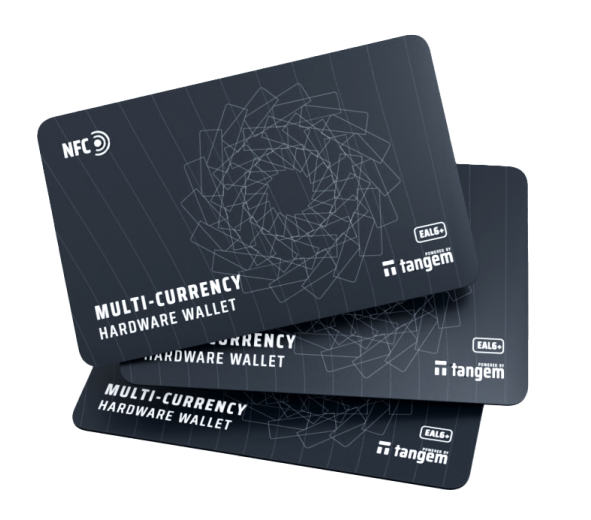
If you’re looking for something compact, durable, and practical today for everyday crypto security, try a smart-card approach before assuming mnemonic-only is the only way. I recommend evaluating devices for certified secure elements, an honest recovery model, transparent firmware practices, and a mobile app that minimizes telemetry; one such product to consider is the tangem wallet, which I found approachable during testing and which balances security with a simple tap-to-sign flow. I’ll be honest, somethin’ about tapping a card does feel like a modern convenience fused with cold-storage ethics, and while it’s not perfect it solves a lot of everyday problems for non-technical users and power users alike.
Practical checklist before you buy
Check for certifications like Common Criteria or EMV-level protections. Confirm the vendor’s firmware update policy and whether updates are auditable. Test the recovery process yourself in a low-value account before migrating real funds. Consider how the device fits in your lifestyle—carry it daily or store it offline—and whether you want a multisig setup to distribute risk across devices and people.
FAQ
Can I lose a card and still recover funds?
Really?
Can I lose a card and still recover my funds with these systems? Answer: usually yes, but it depends on the recovery scheme you choose and implement. If you use a Shamir or multisig-based recovery you can rebuild keys from parts, and if the vendor offers encrypted backups you should understand the threat model and test restores before trusting them with significant value. Always practice a restore in a controlled environment — it’s the only way to know your process works and to catch gotchas like app incompatibilities or QR scanning glitches (oh, and by the way…).
Are smart-card wallets better than seed phrases?
Short answer: neither is a silver bullet.
On one hand seed phrases are universal and well-understood among crypto-native users. On the other hand smart-cards reduce human error and remove the temptation to stash plaintext backups online. In practice I prefer layered defenses: a tamper-resistant card for everyday signing plus a tested, well-documented recovery approach that you control.