

Organizational budgeting is collaborative, data-driven, and departmentally focused throughout the budget cycle not just one-time. Departmental budgeting, especially when supported by modern budget and forecast sofware, fosters a more collaborative, agile, and financially savvy organization. In healthcare, departmental budgeting is especially important for managing departmental costs and allocating resources effectively. Establishing clear communication goals is essential for successful inter-departmental budget discussions.
- The platform features a ton of different accounting and finance templates that are all easy to use and can be customized to suit the needs of your company.
- The budget is based on the previous year’s spending and includes a 5% increase for inflation.
- Financial planning and analysis (FP&A) provides the insights that drive growth, protect profitability and guide new investments.
- Initially, it is not easy to delegate the authority to spend the company’s funds.
- Visit the national deficit explainer to see how the deficit and revenue compare to federal spending.
Learn best practices for purchasing, finance, and more
This type of budget is often used by institutions where income is fairly predictable (such as tuition fees) and where costs are relatively stable (e.g., salaries, infrastructure maintenance). Navigating conflicts in inter-departmental budget unearned revenue discussions can be challenging, but I’ve found that the key lies in fostering open communication. During a particularly contentious meeting, I suggested we focus on finding common ground by identifying shared goals. To my surprise, this simple shift in approach transformed the energy of the room.
Departmental Budgets
Empower management and analysts with graphic and reporting tools, communicate status updates to key stakeholders with unmatched clarity. Prebuilt integrated with PowerPlan portfolio of products streamlines the planning process and ensures alignment with your Capital Budgeting & Forecasting, Plant Accounting and your Tax functions. Although budgets may appear omnipresent, not all businesses consider them essential. In 2020, fifty percent of small enterprises functioned without a formal budget. According to experts, companies may eschew standard budgets because they are superfluous or fail to anticipate variations in corporate earnings. Of the ‘core’ departments, the department for business and trade (DBT) and the department for the environment, farming and rural affairs (DEFRA) spend the least.

Establish policies on budget transfers between departments
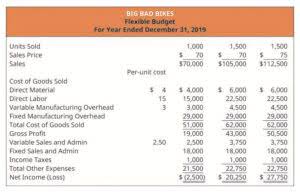
Conduct Community Risk Assessments (CRA) to identify areas where budget investments will have the most impact. This data-driven approach ensures that funding aligns with actual service demands rather than arbitrary allocations. To help visualize how a master budget and a departmental budget might look, let’s walk through a basic example. These are simplified formats, but they give a good idea of what these documents typically include.
Integrating emergency funds in this way not only protects your organization but also https://kerjadijepang.net/understanding-the-healthcare-accounts-receivable-6/ fosters a culture of preparedness. Whether it’s a sudden drop in revenue, a regulatory fine, or a global event that disrupts operations, having dedicated reserves can mean the difference between resilience and crisis. Keep a close eye on the performance of your plan over the first few months following its execution. You might find that some are experiencing difficulties with keeping within the budget.
When resources are used more efficiently, it can free up funds that can be used for other purposes or reinvested back into the business. There are several benefits of departmental budgeting, including improved communication and coordination between departments, more efficient use of resources, and better decision making. The departmental budget is the total amount of money that a department has to spend in a given period of time. Gather data on each department’s past budgets, actual spending, and future needs.
Step 4: Build Your Budget Proposal

Along with this, department budgets are also beneficial when it comes to fulfilling the company objectives. With this approach, departments can manage their budgets effectively while aligning with the organization’s broader financial strategy. Bringing departmental budgets together into a unified view is key for clear financial management, strategic alignment, and overall organizational efficiency. When working on departmental budgets within a complex organization, it’s important to smoothly blend these individual budgets into a unified financial plan that management can easily understand and use. This task requires careful planning and analysis at the department level, as well as a methodical way to bring all these budgets together for a clear view of the organization’s financial health.
To simplify this task, we present PPT templates that are content-ready and can help any type of department prepare its budget. A budget allocation plan provides a structured framework for distributing financial resources across a company’s departments, divisions, projects, and other entities. There are many free program budget templates, staff budget templates, and department budget templates online. This will minimize the amount of time you need to spend customizing the template and will make it much easier to fill in the blanks. This article explains everything you need to know about departmental budget planning and how to use a department budget template. That said, it’s always a good idea to have a department budget template at your disposal.
Step-by-Step Guide to Creating a Department Budget Spreadsheet Template
You can easily add new employees to the system, make changes in the previous vendor arrangements, easily get the taxes filled, set multi-level approvals and so much more. One major reason to adopt an automation departmental budgets expense management system is to keep your company safe from expense fraud. Automated expense reporting potentially eliminates all the chaotic processes which are prone to error. This means that the employees don’t have to save receipts and manage the budget, the executives don’t have to panic about misinterpreted or wrong information.